Guides

You Are Here:  Home    Online Learning    Guides    Ideas that Really Work - Worldview Evangelism
Online Learning
Featured Product
And Beginning with Moses
Identifies some of the problems and difficulties faced when sharing the gospel with people in today's culture and offers a biblical solution.
Upcoming Seminars
Ontario, Canada
TERM Seminar
September 22-26, 2008
Idaho, USA
TERM Seminar
October 23-25, 2008
New Brunswick, Canada
TERM Seminar
October, 2009
Ideas that Really Work

There are many different ways one can share the gospel using TERM, but let me list some that we have found effective.

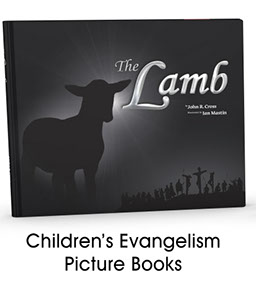
  • Give Away: Give a copy of The Stranger book or DVD to a friend, neighbor, someone on the airplane—anyone who you feel will read or watch it, but for one reason or another will not have the time to join a Bible study. If the person is from a Muslim background or originated from a Muslim country, give him or her a copy of All the Prophets. New Agers, or other eastern-based religions should receive a copy of By this Name. For children, a copy of The Lamb is appropriate. We continually receive testimonies of people who came to know the Lord simply by reading a book on their own.

  • It's not a bad idea to procure a copy of the various translations to have on hand if your path crosses those who do not speak English well. It is amazing how the Lord has a way of bringing such folk into your life when you have the tool available.

  • Textbook: The Stranger has been found effective as a textbook on the Bible for use in Bible Colleges, Christian schools, home-schools, or youth groups. It is important to use the WorkBook in conjunction with any school setting. I would also encourage you to use visual aids. For schools, the answers can be removed from the back of the coil-bound edition if you don't want your student "peeking." One can use the same techniques as described on page 58, under Home Bible Study.

  • The Stranger, All the Prophets or By this Name is also being used as a textbook for missionary candidates investigating service with home or overseas ministries. These books introduce students to a system of communicating the Bible to the biblically illiterate.

  • Correspondence Course: As a pastor or youth worker, it is sometimes hard to know where a person stands regarding the gospel. The Stranger or All the Prophets combined with the Correspondence Course allows you to operate a church or youth-based ministry. An agreed-upon schedule can be set up. (Remember: don't stretch the study over too long a period of time.) The student can progress through the material on his own time with the pastor or youth worker providing accountability. As one directing the Correspondence Course, the pastor or youth worker can check the course answers and use it as a point of contact and further discussion with the student. (Remember: don't get off on side issues or jump ahead of the story.)

  • Community College Course: Those who have gained experience in teaching the TERM curriculum in a home setting can branch out and offer an "Intro to the Bible" course at a local community college or night school. One can use the same techniques as described on page 98, under Home Bible Study. To take on this level of teaching, we would strongly suggest that you attend the TERM Seminar at least twice and master the use of the visual aids.

  • Church Sunday School: To be honest, this is my least favorite environment for teaching TERM. The dynamics of Sunday School classes are such that the one-day-a-week class is usually limited to 45 to 50 minutes with attendance being somewhat sporadic. This violates some key principles we have discussed:
    1. The entire course is spread over a long period of time, much greater than the recommended 4 to 6 weeks. Instead of having the feel of one study that is tied together, the TERM teaching becomes fragmented and each study tends to stand alone, disconnected from past lessons.
    2. Due to time constraints, the material covered in each session is minimal, necessitating more review which then lengthens the time to cover the total content.
    3. Key building blocks of information are missed because students are not there for every class. This breaks down the continuity of the material covered, even for those who have a fairly good Bible background.
    4. Because most Sunday School classes are comprised of believers, there is a tendency to want to discuss content and get off on other subjects.

    For these reasons, we have seen it fail over and over again in the Sunday School environment. I have heard folk say, "Oh, we really enjoyed your book. We only got up to Chapter 11 before we took our summer break, but it was sure good!" Well, if you review the chart on this page, you see that they missed the most critical conclusion to the entire study.

    So, can TERM be used in a Sunday School setting? Yes, it can, if everyone involved understands the obstacles. The following guidelines have been built on experience. I suggest you take them seriously and not attempt to reinvent the wheel. Here are some suggestions:

    1. If it is an adult class, have the known believers read this book before starting. You will need their cooperation to keep the class on course.
    2. In your first session, discuss upfront the need for continuity in a Bible study of this nature. Emphasize that this is not a typical Bible course where each lesson stands on its own.
    3. Obtain from your audience a commitment to stay current with the lesson by doing the questions in the WorkBook. They can read portions they missed or "catch up" by watching the missed material on The Stranger DVD. Staying current is critical for the study to make sense.
    4. Ask for permission to meet a full 55 minutes or more. This may mean restructuring the class time. In one group I taught, the students came early and then skipped the Sunday school opening exercises. Snacks and coffee were available.
    5. Assuming you have 55 minutes of teaching time, divide the class hour as follows:
      1. 10 minutes for review of WorkBook questions
      2. 40 minutes for new material
      3. 5 minutes to assign questions in WorkBook
    6. If using The Stranger DVD, see pages 60-61 for schedule.
    7. In teaching TERM, watch out that you stick tenaciously to the content and not be sidetracked. Believers are notorious for sidetracking the study.

    If you follow this advice, you will find the study quite fruitful.

    Before I leave this category of use, I want to suggest one other alternative approach. It does require a high level of commitment from the class, but it has worked quite well when the assigned time for study is limited. Here it is:

    1. Each student is required to make a commitment to read an assigned portion of The Stranger on a weekly basis. Usually a complete chapter is chosen with the exception of Chapter 14 which is usually split into two weeks.
      NOTE: This approach to the TERM material will only work if this commitment is kept.
    2. The student arrives at the class with the assigned chapter in The Stranger already read and the WorkBook answers completed.
    3. The teacher, using the WorkBook, then carefully reviews the chapter in The Stranger that was read in the preceding week and answers any questions pertinent to that chapter. Once again, the teacher must tenaciously stick to the subject.

  • Church Bible Study: In this type of study, I am assuming several factors: a number of folks will be in attendance, most will be believers, the study will be organized around a week day and held during the day or in the evening.
  • From my experience, these studies have a much higher success rate than the Sunday School environment.

    1. The students are willing to take more than an hour for the lesson, often taking as much as two hours in any one session to complete this special type of Bible Study. As a result, less review is needed and the course in accomplished in a much shorter length of time.
    2. If too many folk will be missing on the assigned Bible study day, then the class can be shifted to another day.

  • Home Bible Study: One of the most effective ways we have found to share the gospel is to read through The Stranger or By this Name with a friend in a home study.
    1. The study is usually limited to the teacher and one or two unbelievers. If more unbelievers are interested, it is better to do a second study. In large groups it can be hard to track where unbelievers are at. Many will not share openly, and all it takes is one issue-oriented person to create problems in the minds of others.
    2. Sometimes Bible teachers "look down" upon the idea of reading together out loud. It is viewed as a children's approach to learning. But from our experience, reading out loud has been well received when handled properly. Above all else, this sort of reading does have scriptural precedents. The Bible says that Ezra stood in front of a large crowd and...

    3. ...read from the Book of the Law of God, making it clear and giving the meaning so that the people could understand what was being read.
      Nehemiah 8:8

      It could be argued that Ezra needed to do that because folks could not read for themselves or scrolls were rare. But Paul also told Timothy to ...

      ...give attention to the public reading of Scripture, to exhortation and teaching.
      1 Timothy 4:13 NASB

      Why Timothy should be commanded to read the Word of God out loud is interesting. Was it for the same reasons given above? Or was there another reason for it? Consider the following as it relates to reading The Stranger:

      1. Presidents, kings and queens all resort to reading written speeches. Why? The reason is simple. They don't want to say the wrong thing or be misunderstood. Communications are consequential.
        The Gospel is the most important, consequential message in the world. Reading assures that you are accurate in your delivery of the content.
      2. Reading assures that you cover all the material. You won't miss vital information.
      3. When compared with the lecture format, reading results in significantly higher retention, using three senses instead of one. You are seeing, speaking and hearing, versus just hearing. Even the written page is a visual aid, and visual aids help us retain information. Have you ever told a person that you cannot find a verse in someone else's Bible, but you know right where it is located on the page in your Bible?
      4. When compared with the lecture format, reading results in significantly higher comprehension.
      5. Reading assures a minimum of preparation for the teacher which is a very big factor in today's "overdrive" society.
      6. Reading provides the teacher with a means of communicating a significant volume of material with minimal fatigue. A teacher will likely do a better job. The Bible, from Genesis to Acts, covers a lot of information. However, when read, not only is an overview possible, it is very effective.
      7. Reading assures a logical progression of thought even if you, as a teacher, are a little "scatter brained" that day.
      8. Reading is non-intimidating. You can read some strong statements and as long as they are being read, the statements will be tolerated and the student will not feel threatened. However, if you are saying those same statements looking the student in the eye, you can have an argument on your hands.
      9. Reading assures that the Holy Spirit does the work through His Word. A student can't say he or she was "moved" emotionally by the teacher's eloquence in delivering the message.
      10. Reading minimizes personality "static." It helps take the focus off the teacher and places it on the written word, the message.
      11. Reading lets the message speak for itself. In TERM teaching we emphasize this. Why? We believe the Word is sufficient to accomplish its purpose.
      12. Reading teaches a person right from the beginning that the answers are found in the written Word which a person can learn for himself.
      13. Reading subtly teaches that God gave us his message in writing.
      14. It is a reality of life that as you are taught, so you will teach. Reading out loud models a means of communication that others can imitate even if they are not gifted teachers. This means of communication is transferable even at the "new born" level. It is not uncommon for students to go home and start reading the book with their children, their parents, or a friend.
      15. Reading allows students to refer back to the content later to refresh their memory. They have the "whole sermon."
      16. Conviction of sin is seen as coming from the Word, not because the teacher said something was "wrong."
      17. Reading, when done in the right manner, focuses a person's attention on the Word, not on the ability of the one delivering the message.
      18. Men often don't read well especially out loud. At times this holds them back from attempting to read Scripture or participate in discussion of spiritual things. We have found that reading The Stranger has resulted in a renewed confidence to read out loud in other Bible studies, as they gain experience reading in a TERM study.
      19. Reading introduces new believers to the idea that reading the Scriptures is a vital and necessary vehicle for growth, a life habit to be developed.
      20. Reading minimizes 'hidden agendas.' Students know that they have all the information in hand. They are not left wondering "What else is there?" The result? There is less suspicion. This is important in our 'hot sell' sensitive culture.
      21. When in a group, reading helps the students keep their focus. Hearing various voices as each one reads and anticipating one's own turn, all help keep a person from losing his or her attention to the material.

      Probably the most significant plus for reading is that you do not have to be a gifted teacher to do it. All you need is to be able to read out loud relatively smoothly. We would suggest that someone planning on using this method practice reading Scripture out loud for a minimum of five minutes daily. It doesn't take a brilliant or gifted teacher to be able to share the gospel by reading, but it's no use being a dull tool. Being a smooth reader, reading with expression, and giving words the right emphasis will help greatly.

      In spite of all the positive points for reading, preaching and teaching are not inferior methods of communication. Far from it. What I am saying is that reading should not be excluded as a viable means of passing on the Word.

      On the average, it takes 12 to 18 hours to read out loud through The Stranger. The time required depends on your own ability to read, that of your student, how often you get together, the use of the WorkBook, and how many visual aids you use.

Frequently Asked Questions


My student is not comfortable reading out loud. What should I do?

Have a partner join you and read the Scripture verses in place of your student. If this is not possible, read both the text and the verses yourself.

How long should our reading sessions be?

The ability of your student or group to follow along with comprehension will vary. Most can read together for 45 minutes to an hour without difficulty. Two hours is not uncommon. Injecting short breaks (1 or 2 minutes) helps maintain alertness. If your student becomes tired, stop, and resume the study at another time.

My student pronounces words poorly. What should I do?

Avoid making an issue of pronunciation—you risk embarrassing your student. Only offer correct pronunciation if asked to do so.

Where is a good location to meet with my student?

Try to meet in a location where your student is comfortable and where distractions are minimal. A blaring television, ringing phones, loudspeakers, crying children, and disruptive animals should be avoided. Meeting in your home allows you to control distractions. Also, your student might prefer a private location rather than a public setting since he or she may feel self-conscious about doing a Bible study at work or with family members around.

What if my student has questions?

You will want to avoid getting bogged down or sidetracked trying to answer questions, even good ones. Writing questions down will help satisfy your student that you are not evading his question. This also gives you more time to consider the answer without being put on the spot. A simple response such as, "That's a good question. Let me write it down and we will come back to it", will demonstrate your sincerity. Most of your student's questions will be answered as you progress through The Stranger. Assure your student that you will come back to any unanswered questions after you have finished reading the book. Many questions become irrelevant as your student comes to understand the gospel clearly.

How often should I try to get together with my student?

Twice a week is good. Explain to your student that moving quickly through the material means less review and better comprehension.

What if my student wants to read ahead?

It certainly will not hurt your student to do this. However, encouraging your student to not read ahead will help maintain his interest in meeting together with you. At the same time, we know of students who have gone ahead and clearly understood the message on their own. If your student does read ahead, continue your study together to make sure there is accurate understanding. Remember, repetition is a proven educational concept.